
Outdoor Spaces Built for Louisiana Weather
Custom Deck Installation for properties needing durable outdoor living areas that withstand high humidity and seasonal storms
Contact Us
We will get back to you as soon as possible.
Please try again later.
High humidity and frequent rain in Southeast Louisiana create specific challenges for deck structures that many standard installations fail to address within the first few years. Renovation Nation provides custom deck installation in Covington using materials and construction methods designed for the region's climate patterns. Properties with aging decks that show warping, rot, or structural weakness need replacement systems built to handle moisture exposure without compromising safety or appearance.
Custom deck installation addresses structural failures caused by water infiltration and wood decay by selecting materials based on exposure conditions and usage patterns. Pressure-treated wood decks require proper flashing and drainage details to prevent moisture accumulation at ledger board connections, while composite decking offers reduced maintenance in areas where humidity accelerates surface deterioration. Multi-level deck systems account for grade changes and provide functional transitions between indoor spaces and yard areas, with railings and stairs built to current load requirements.
Schedule a property evaluation to review existing deck conditions and discuss material options suitable for your site.
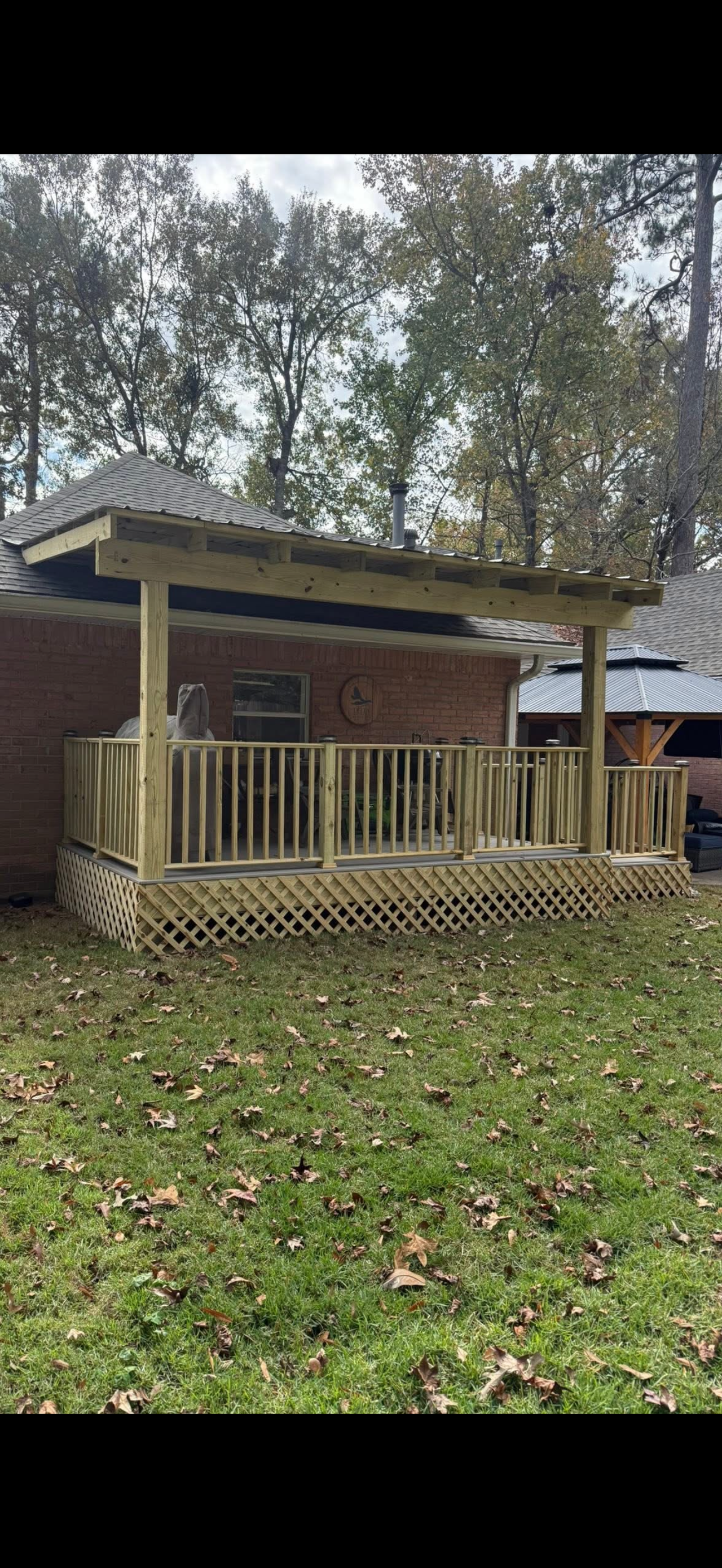
What Proper Deck Construction Requires
Deck construction in Louisiana involves more than surface board installation—proper systems include ledger attachment verified for structural support, joist spacing calculated for material type, and post footings sized to prevent settling in saturated soils. Composite decking installations require specific fastening methods that allow thermal expansion without board distortion, while pressure-treated lumber needs end-cut sealing to reduce moisture absorption at vulnerable edges. Deck staining and finishing for wood systems depend on surface preparation and product selection that penetrates rather than simply coating the grain.
After installation completes, you'll notice a structure that remains level without bounce or flex, railings that meet grip and spacing standards for safety, and stairs with consistent riser height that prevents tripping. Surface boards drain water quickly rather than holding puddles, and composite materials maintain color uniformity without the splitting or cupping common in untreated lumber exposed to weather cycles. Custom gates and access points operate smoothly with hardware designed for outdoor corrosion resistance.
Deck repairs and rebuilds address isolated failure points when replacement of the entire structure isn't necessary, focusing on ledger board reattachment, joist sistering for reinforcement, or board replacement in high-traffic zones. The decision between repair and full rebuild depends on the extent of structural degradation beneath visible surface damage.
Questions Before Starting Your Project
Deck projects involve decisions about materials, layout, and long-term maintenance that affect both upfront investment and durability over time.
What determines whether pressure-treated wood or composite decking works better for a specific site?
Composite decking resists moisture-related warping and requires no periodic staining, making it suitable for properties where long-term maintenance access is difficult, while pressure-treated wood offers lower initial material costs and can be repaired in sections as individual boards age.
How does soil saturation in Covington affect deck footing requirements?
Footings in areas with high water tables need deeper placement below frost and saturation lines to prevent seasonal heaving, and concrete piers require adequate diameter to distribute load across soil that softens during extended wet periods.
When should a multi-level deck system be considered instead of a single platform?
Multi-level designs work for properties with significant grade changes between door thresholds and yard elevation, providing functional landings at different heights without requiring excessively tall stair runs that create safety concerns.
What maintenance does composite decking actually require compared to wood?
Composite materials need periodic cleaning to remove mildew and debris accumulation but don't require sealing or staining, while wood decks need refinishing every two to three years to maintain moisture protection and surface integrity.
How are deck railings and stairs built to meet current safety standards?
Railings require balusters spaced to prevent a four-inch sphere from passing through, top rails mounted at 36 to 42 inches above the deck surface, and graspable profiles that allow secure handholds, while stairs need consistent riser heights within three-eighths inch across the entire run to prevent trips.
Renovation Nation builds deck systems designed for the specific conditions your property presents, from material selection through final finishing details. Arrange an on-site consultation to discuss layout options and review construction methods for your outdoor space.