
Floors That Withstand Household Traffic
Flooring Installation for homes needing durable surfaces that handle moisture, pets, and daily wear without constant refinishing
Laminate flooring installed a decade ago shows edge swelling and plank separation where humidity penetrates joints, while hardwood floors develop gaps between boards as seasonal moisture changes cause expansion and contraction cycles in Gulf Coast climates. Flooring installation by Renovation Nation addresses surface wear and subfloor preparation issues that affect long-term performance in Covington homes. Properties with scratched surfaces, water-damaged planks near entryways, or outdated materials that trap dirt and show permanent staining benefit from complete floor removal and replacement using materials selected for specific room conditions and traffic patterns.
Flooring installation requires subfloor evaluation before material placement—concrete slabs need moisture testing to prevent adhesive failure, wood subfloors require leveling compound to eliminate high spots that cause plank rocking, and transitions between rooms demand threshold installation that prevents tripping while accommodating height differences. Luxury vinyl plank provides water resistance suitable for kitchens, bathrooms, and entryways where spills and tracked moisture damage traditional hardwood, while tile flooring offers complete waterproofing in areas with high exposure. Baseboard installation completes floor transitions by covering expansion gaps and providing finished edges that hide substrate irregularities.
Schedule a property evaluation to review existing floor conditions and discuss material options for your traffic patterns.
The Difference Between Flooring Materials
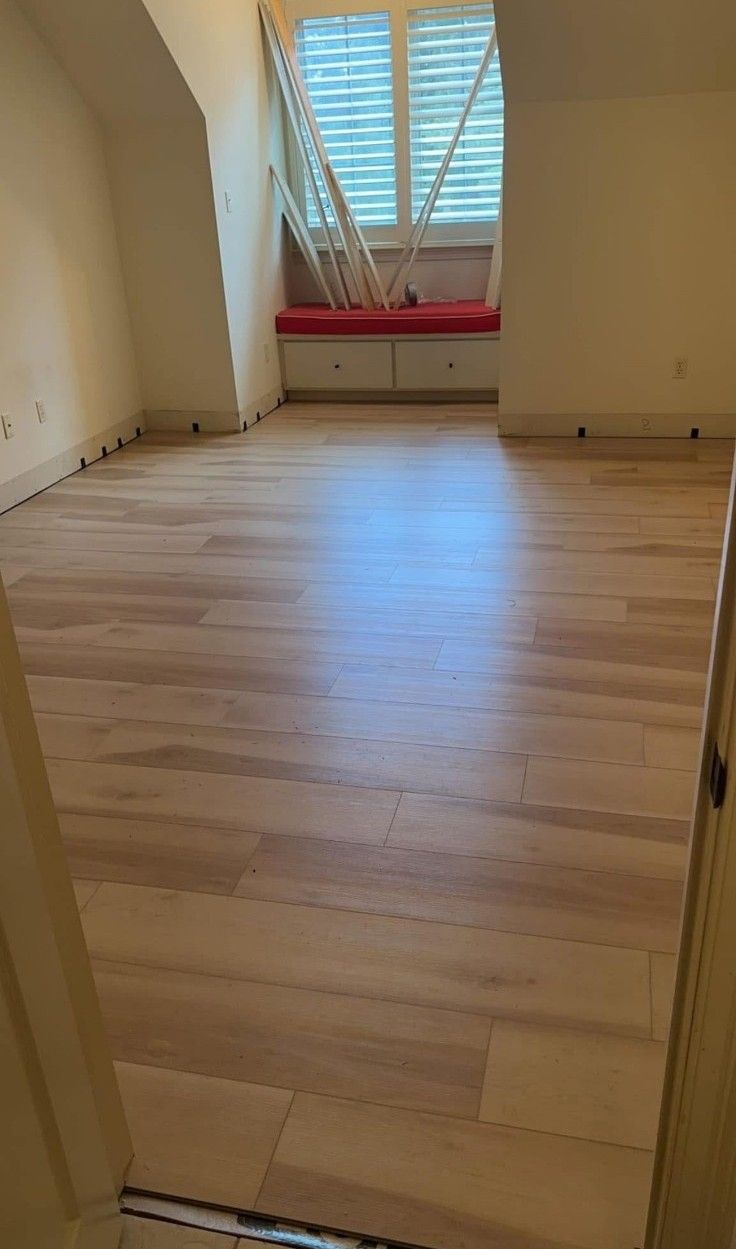
Flooring material selection depends on room function and exposure conditions—luxury vinyl plank uses interlocking edges that float over subfloors with built-in underlayment for sound dampening, allowing removal and reinstallation if water damage affects isolated planks. Hardwood flooring requires acclimation to interior humidity levels before installation to minimize post-installation movement, with nail-down attachment to wood subfloors and finish coatings applied after sanding to achieve uniform appearance. Laminate flooring costs less than hardwood but shows visible damage at edges when moisture intrusion occurs, while tile flooring provides durability in high-traffic areas with grout joint maintenance determining long-term appearance.
After installation completes, you'll notice floors that remain level without squeaks or movement underfoot, transitions between rooms that align without tripping edges, and surface finishes that resist scratching from furniture legs and pet claws. Luxury vinyl plank maintains factory color and texture without the fading common in lower-quality products, hardwood floors show consistent stain color across all boards, and tile installations include grout lines uniform in width without lippage between adjacent tiles. Baseboard installation covers gaps at wall edges and provides clean transitions where flooring meets vertical surfaces.
Floor removal and replacement involves more than surface swapping—old flooring disposal, subfloor repair where damage exists, and underlayment installation that prevents moisture transmission all contribute to finished floor performance that extends years beyond installations that skip preparatory steps.
Questions Before Starting Your Project
Flooring projects involve material selection and installation details that affect both appearance and durability over years of use.
What makes luxury vinyl plank suitable for humid climates like Covington?
LVP uses composite construction that doesn't absorb moisture or swell at edges like laminate flooring, maintains dimensional stability through seasonal humidity changes, and provides waterproof performance that protects subfloors from spills and tracked water common near exterior doors.
How does hardwood flooring installation account for seasonal movement?
Hardwood installations include expansion gaps at wall edges covered by baseboards, use fastener spacing calculated for board width and wood species, and require interior humidity control to minimize seasonal expansion and contraction that causes gaps or cupping.
When should tile flooring be selected over plank materials?
Tile works for areas with heavy moisture exposure like bathrooms and laundry rooms, provides superior scratch resistance in entryways with sand and dirt traffic, and offers design flexibility through size and pattern options impossible with rectangular plank formats.
What subfloor preparation does flooring installation require?
Subfloors need cleaning to remove debris that prevents adhesive bonding, leveling compound application to fill low spots and smooth high areas, and moisture barrier installation over concrete slabs to prevent humidity transmission that damages flooring materials.
How does baseboard installation improve finished flooring appearance?
Baseboards cover expansion gaps required for floating floor installations, hide substrate edges and underlayment visibility, and provide vertical transitions that protect wall surfaces from vacuum and mop contact during cleaning.
Renovation Nation installs flooring systems using preparation methods and material combinations proven to perform in Southeast Louisiana conditions. Arrange an on-site consultation to review room-specific requirements and discuss flooring options that match your household use patterns.